Sustainability And Climate Protection
Using Energy Holistically.
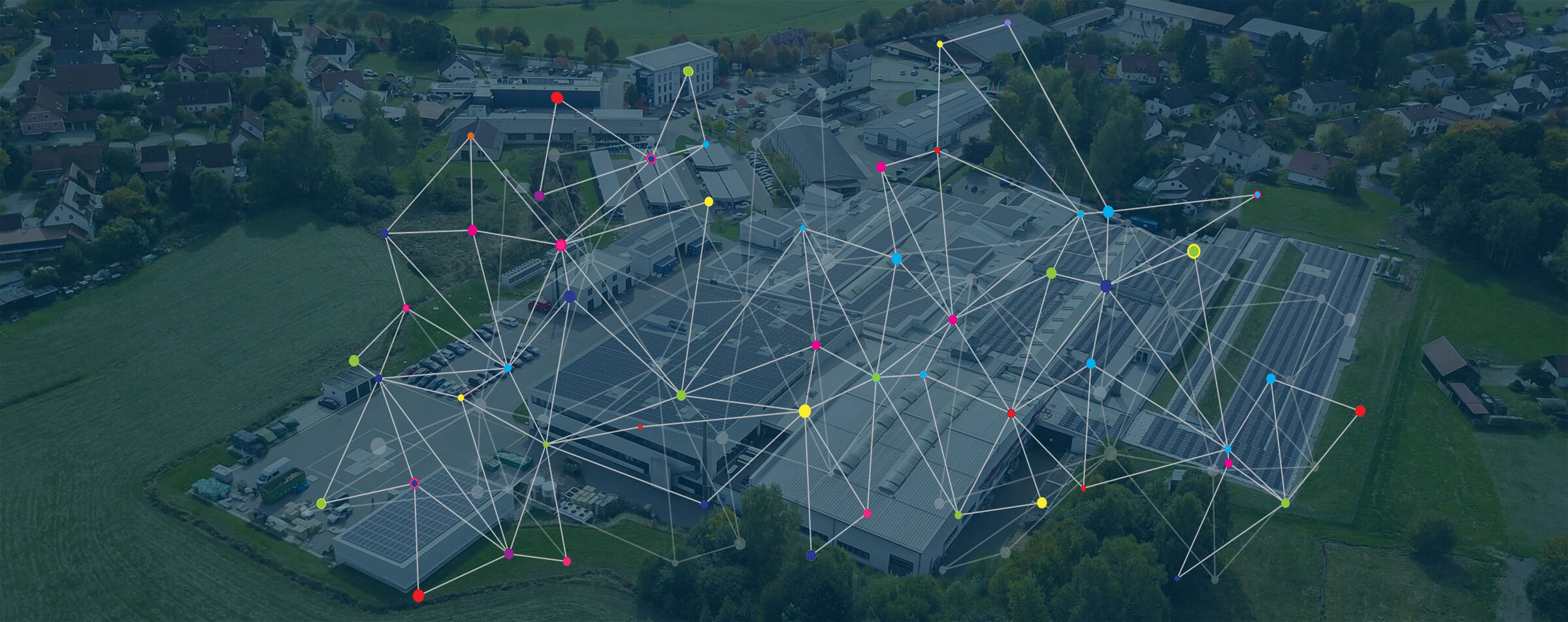
Since 1990, Irlbacher has been committed to climate protection with a spirit of innovation and foresight. By developing sustainable solutions and using resources responsibly, the company is shaping a future-proof manufacturing process - one that is efficient, resource-conserving, and sustainable. With AI-driven, highly efficient use of its own electricity and a smart storage concept, Irlbacher is well on its way to achieving carbon neutrality. The use of AI, combined with a custom-programmed monitoring system, supports the efficient monitoring and control of all energy flows within the company.
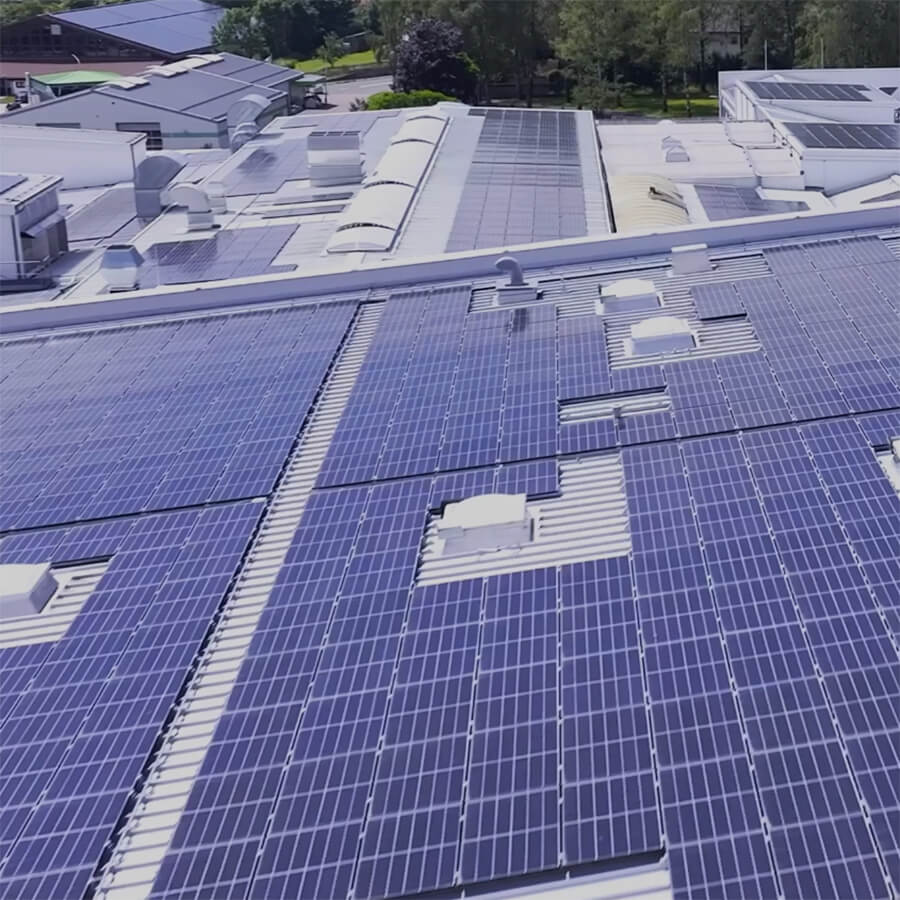
By commissioning our own rooftop PV system, we are able to save approximately 500 tonnes of CO2e emissions
each year.
Using Energy Holistically.
Because the complex production processes in glass technology require corresponding energy systems, we integrate all sectors of the company -including electricity, heat (thermal oil), refrigeration, compressed air, vacuum, water, and wastewater, using the appropriate equipment such as combined heat and power (CHP) units, pumps, absorption chillers, heat pumps, rotary heat exchangers, concrete core activation systems, gas boilers, electric boilers, PV systems, and storage tanks for heat, cold, and electricity.
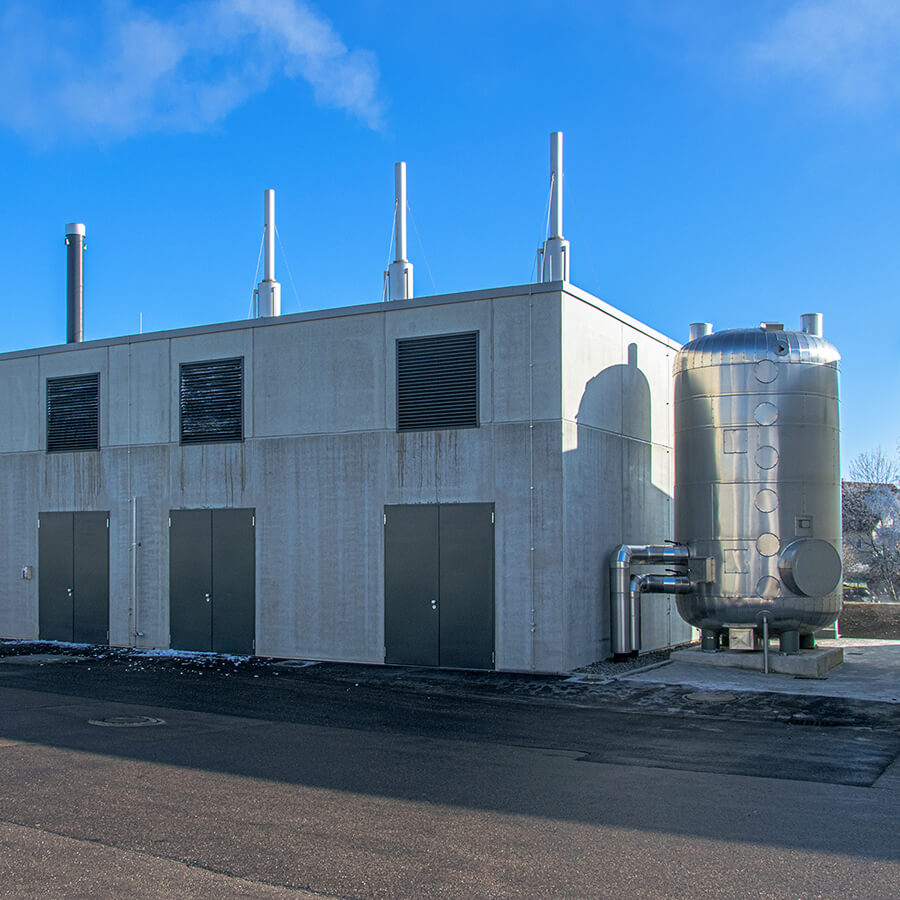
Our own energy hub
The highly efficient CHP unit was built as the main supply and distribution hub for all required energy media and has been in operation since 2019. It features 3 engines with a total electrical output of 999 kW. The thermal output is approximately 1,400 kW. The waste heat is extracted and used to heat thermal oil, which is efficiently utilized as a heat source for drying processes in production. Future plans include operating the CHP unit using biogas and biomethane sourced from the local area.
Highly efficient thermal oil hot
air drying
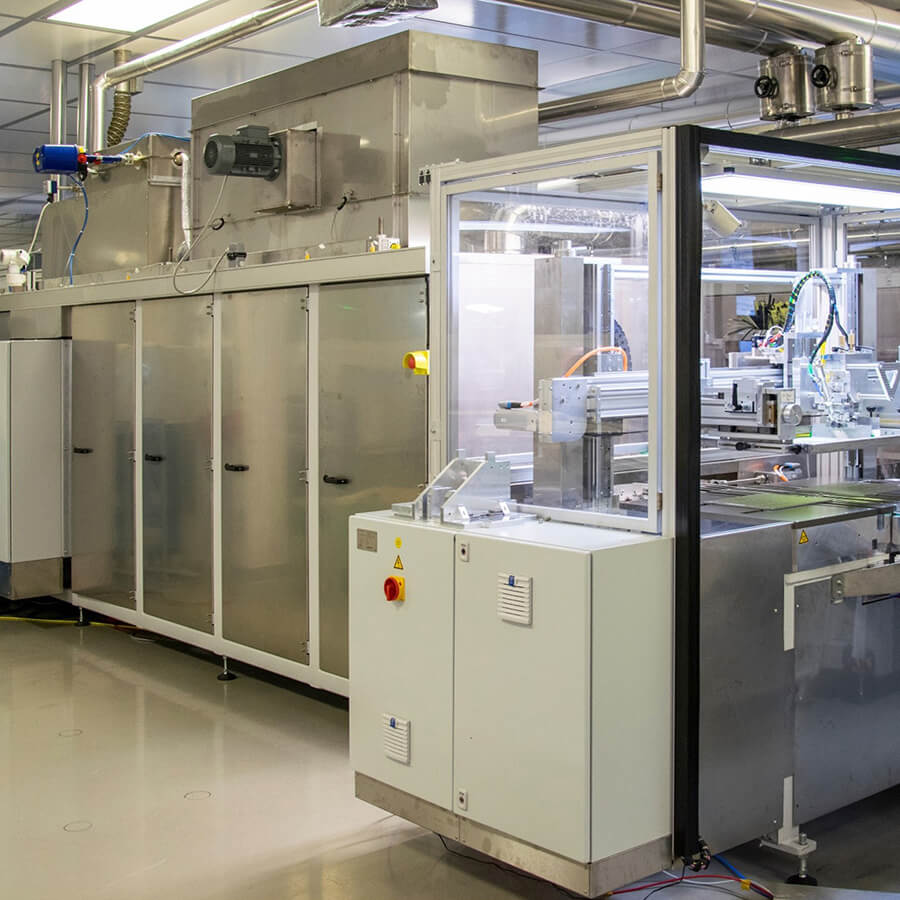
We have developed a proprietary thermal oil and hot air drying process for screen printing inks on glass substrates that reduces energy consumption during the drying phase by approximately 70%. Further energy savings are achieved through a more compact design; our new, shortened screen printing lines require only about 42% of the cleanroom space previously needed. As a result, this process alone allows us to reduce our CO2 emissions by 80%.
Cooling - produced from excess heat
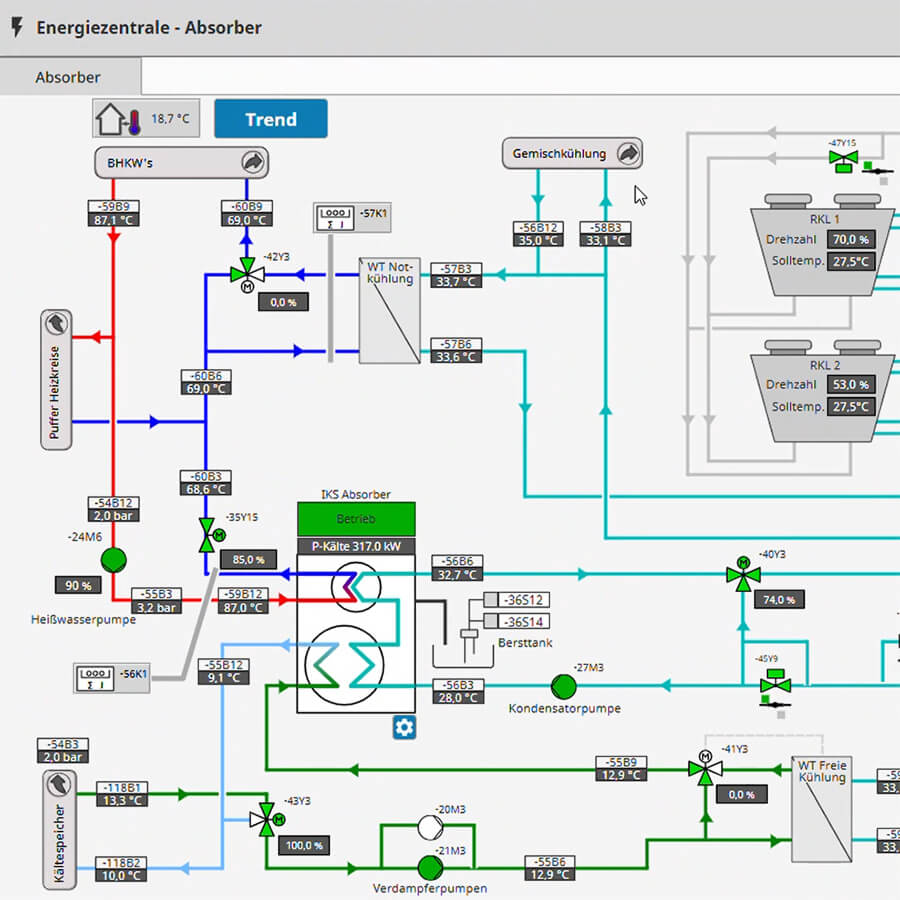
To utilize the self-generated solar power and further repurpose excess heat, an absorption chiller was installed alongside the CHP unit. A cooling capacity of 500 kW requires approximately 610 kW of heat. The ratio of cooling output to input heat (COP) is approximately 0.82. Adiabatic dry coolers are used for summer operation, while free cooling is sufficient for winter operation.
Generate your own electricity with PV and battery storage
With its own rooftop PV system, which has been expanded in stages to a total capacity of 2.2 MWp across various installations, Irlbacher has been generating a large portion of the company's total electricity needs in-house since 2023/24. A battery storage system with a capacity of 685 kWh ensures that the generated power can be used on demand. Any surplus electricity is fed into the public grid at the best possible price.
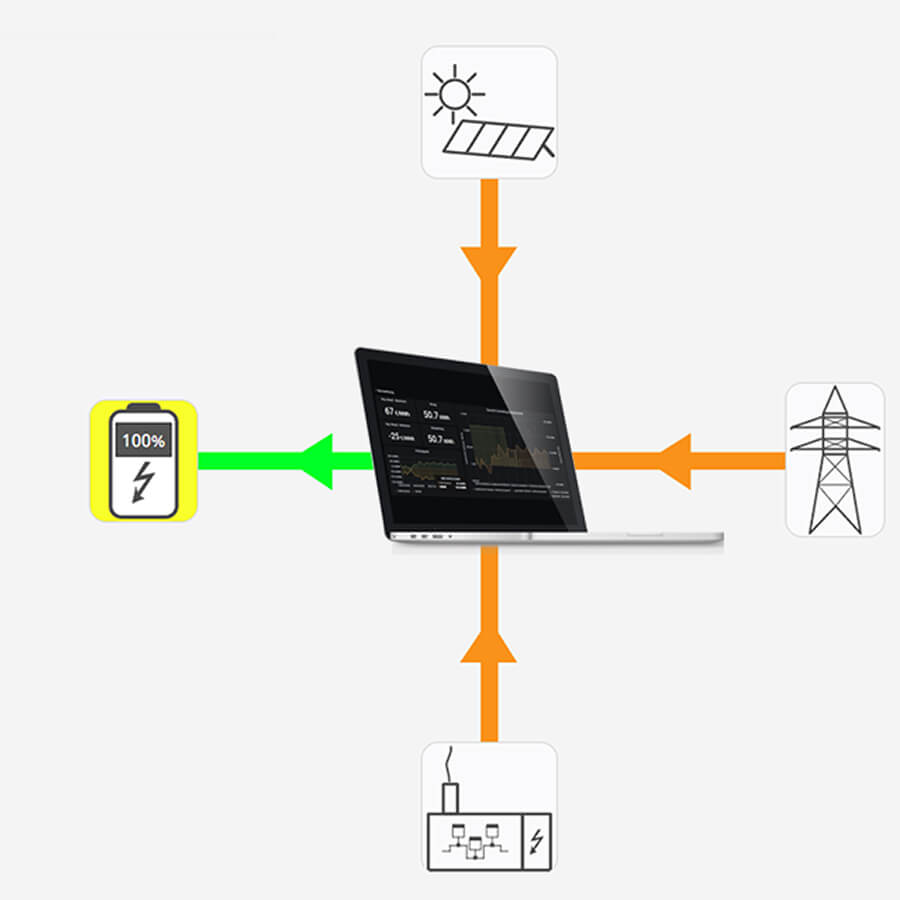
Dynamically interconnected sectors with AI support
To meet our planned production capacity, electricity, water, heat, thermal oil, cooling, compressed air, vacuum, and our storage systems are controlled and monitored in real time via a dedicated monitoring system. Since 2024, Consolinno’s AI-powered FlexA software has been analyzing and regulating our energy systems using data science. This allows us to generate forecasts and precisely align planned production workflows with the optimal availability of renewable energy.