HMI Development
Glass user interfaces for innovative HMI solutions from a single source. Drawing on 90 years of expertise, we work with our customers and partners to develop ready-to-install modules that serve as human-machine interfaces (HMIs) in a wide variety of products and are suitable for use in virtually any industry. Our HMI development is grounded in a consistent user-centric approach and the goal of creating user-friendly designs.
With our technologies, we offer a versatile toolkit of solutions for the development and implementation of modern user interface concepts in HMI projects. HMI systems process large amounts of data and convert it into understandable information to enhance efficiency and user-friendliness. Displays play a central role in this process, as they clearly present operational information and system status visually. Our solutions are developed for a wide variety of devices and systems to meet a diverse range of requirements. The deployment of HMI solutions is a critical step following the completion of development to ensure seamless integration at the customer’s site. The development process encompasses various phases, from analyzing the current situation and defining system requirements through concept development to usability testing. A well-thought-out concept is crucial for the development of successful HMI products. We create custom-made products that are optimally tailored to the respective applications. The journey toward HMI development is characterized by continuous innovation, with current trends such as multi-touch gestures and the combination of haptic controls with touch sensors further enhancing usability and the user experience.
When it comes to high-quality design, intuitive operation, and an optimal user experience, we are your partner.
Human Machine Interface - a brief introduction
The Human Machine Interface (HMI) is at the heart of modern products and is crucial for seamless interaction between humans and machines. In today’s industrial landscape - from the automotive sector to manufacturing and medical technology - innovative HMI systems enable intuitive and efficient operation of complex machines and systems. HMI development encompasses far more than just the design of user interfaces: it begins with a well-thought-out concept, continues with creative design, and culminates in the precise implementation of customized solutions. Modern HMIs combine technological innovation with user-friendly design, ensuring that systems are not only powerful but also easy to understand and safe to operate. The continuous advancement of HMI technologies plays a key role in optimizing processes, minimizing sources of error, and, as a result, sustainably increasing productivity across a wide range of industries.
Glass surfaces as human-machine interfaces
Glass surfaces play a central role in the development of modern human-machine interfaces, as they enable intuitive and flexible interaction between users and devices. Glass surfaces are particularly sought after in HMI development due to their durability and design flexibility. Content is organized and presented in a targeted manner on these surfaces to maximize user-friendliness and ensure efficient navigation through digital information. As experts in glass processing, we draw on over 90 years of accumulated expertise to offer every conceivable processing technology for this versatile material.

HMI for Design-Oriented Products
HMI design as a customized solution for a high-quality kitchen appliance. In the development of HMI solutions, we place particular emphasis on modern design and adaptation to the specific requirements of industrial devices. The CNC-machined and multi-printed cover glass is bonded with a plastic frame in our production using a fully automated series process.

HMI for Extreme Conditions in Harsh Environments
An assembly with ceramic-printed and hardened glass for extreme demands at sea is the HMI of a bearing repeater compass for outdoor helms on ships. Robust displays are essential here to reliably and clearly present measured values and system status even under extreme conditions. This system is therefore designed for protection class IP69K.

HMI for Medical Technology
For the high demands on HMIs in medical technology, we have optimized our processes and also supply glass surfaces, printed according to the customer's design specifications, as a ready-to-install assembly with bonded housing frames. The efficient provision of our HMI solutions ensures seamless integration into your medical technology systems.
Development of HMI systems
HMI development plays a central role in designing modern user interfaces for machines and systems. Particularly important is the support for various platforms to efficiently provide, manage, and scale interactive applications. The development process utilizes numerous resources such as specialized tools, materials, and support services, which help developers effectively implement projects and overcome technical challenges.

HMIs for demanding requirements
We develop complete Human Machine Interface assemblies according to our customers' needs and deliver them ready for installation to their production line. Here is an example of an HMI assembly for professional dishwashers.
Vision and concept
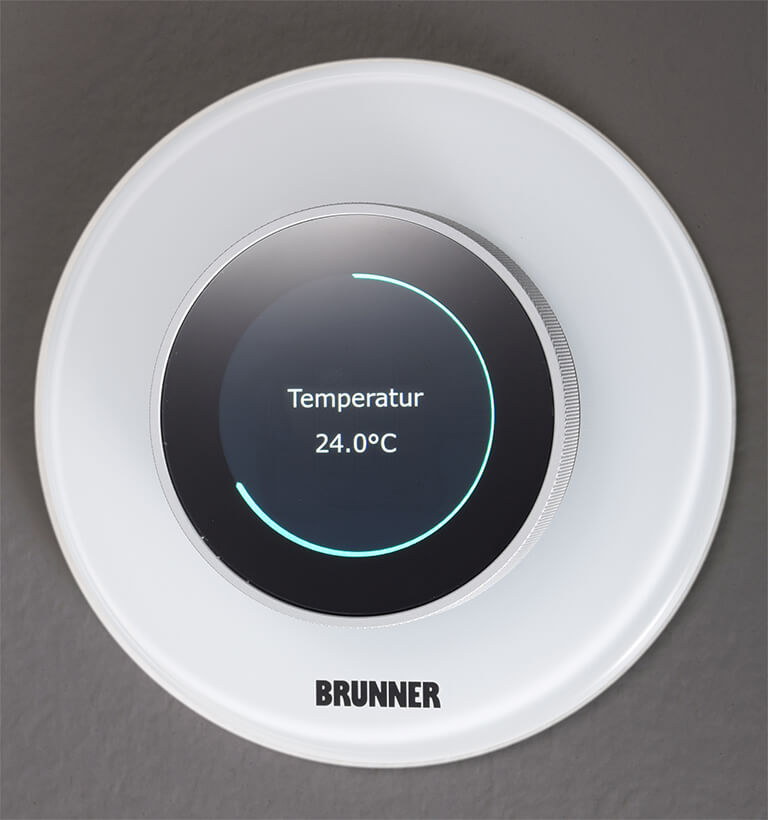
The prototype for a premium HMI for electronic combustion control. The assembly consists of a round touch display with a curved glass cover lens and a mechanical adjustment ring made of anodized aluminum, serving as a haptic control element. The mechanics and electronics, developed in-house, fit into a standard flush-mounted box.

Design and function
HMI in a stylish design as a door station in a smart home. The complete assembly, equipped with a camera, lighting, and many sensors, is manufactured entirely in Schönsee as an innovative product solution. The variety of functions housed in a single device behind an elegant, black glass surface meets the expectations of even the most demanding users.
Customized
HMI Development
Customized HMI development is a central component of modern automation and control solutions. The path of HMI development is a continuous innovation process that constantly opens up new possibilities for intuitive and efficient user interfaces. Through individual adaptations, operating concepts can be optimally tailored to the requirements of various industries and applications.

User interface for people with visual disabilities
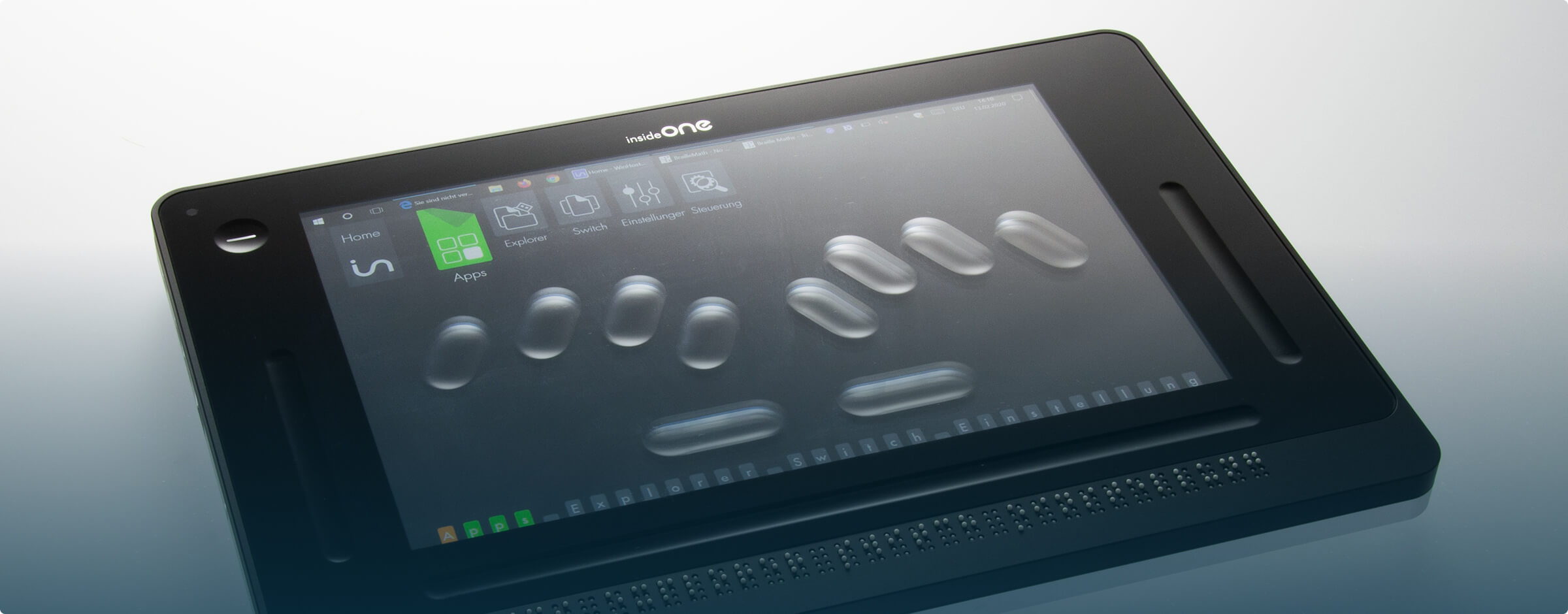
A tablet for visually impaired people – completely manufactured and assembled in Schönsee. The front glass consists of 1.8 mm Gorilla Glass and is processed on our CNC machines. For haptic user orientation, optically pure control fields are ground and polished into the glass surface. The remaining components, such as the aluminum housing and the metal buttons for on/off and volume control, are also produced in-house.

HMI design for the needs of the home appliance industry
Glass user interfaces are elegant and timeless as Human Machine Interfaces. With our decades of experience in technical screen printing, we realize your individual design and, in combination with an optically bonded touch sensor and display, ensure a perfectly readable display. Clearly structured and easily readable displays are crucial for user-friendliness, as they clearly present operating information and system status.
HMI Demonstrator shows design diversity
The development of HMI demonstrators allows us to vividly present and make tangible the design diversity and functionality of modern user interfaces. For further information beyond our website, please feel free to schedule an appointment with us directly on-site.
Diverse possibilities in HMI development
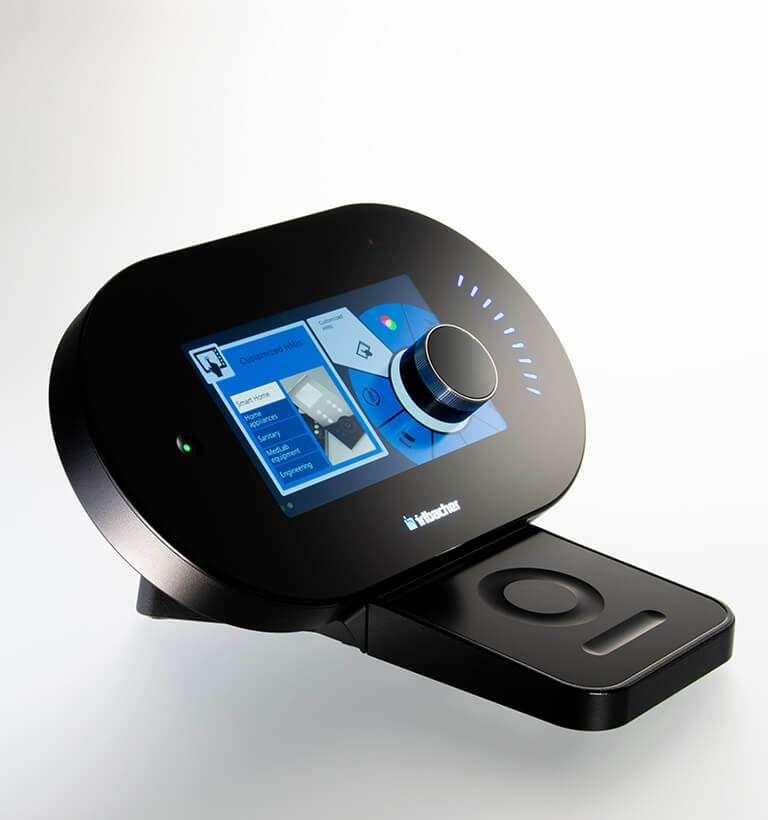
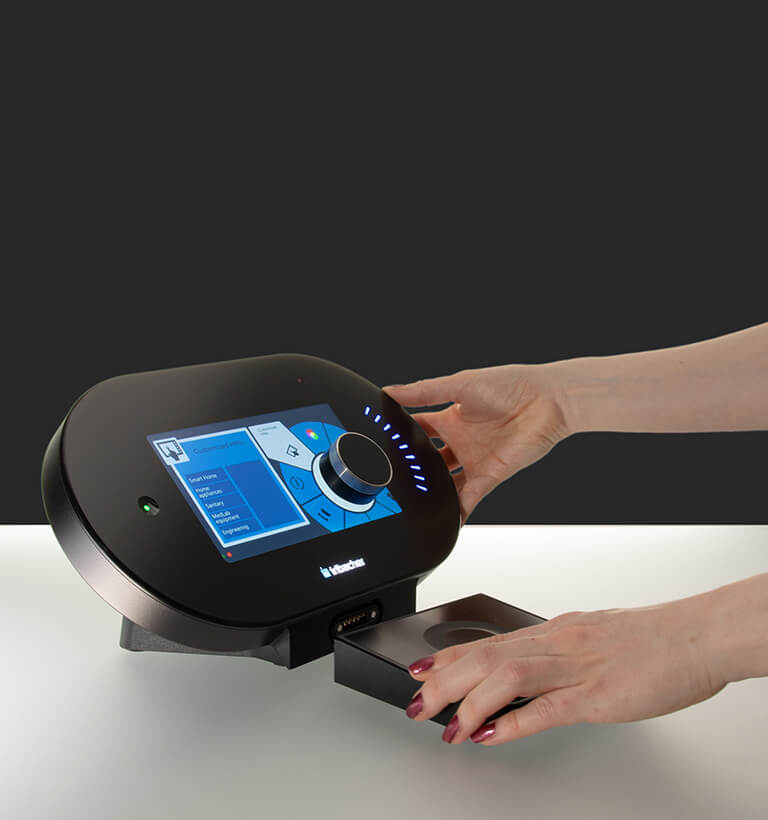
With our in-house manufactured demonstrator, we show what is possible at Irlbacher when it comes to developing a modern Human Machine Interface. The combination of user-friendliness, elegant design, and reliable performance becomes tangible here for future development processes.
Combination of haptic and capacitive sensors
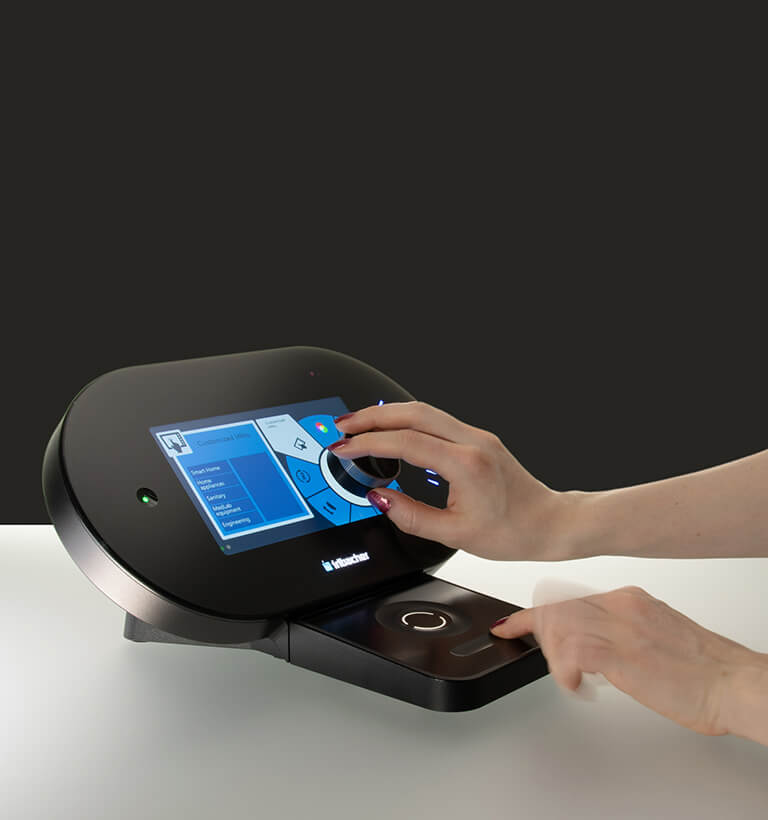
A rotary control, glued to the front glass as a central control element, is located directly within the active area of the touch sensor, thus creating a connection between the analog and digital worlds. An option for control elements made of capacitive sensors with additional haptic orientation is demonstrated by the sliders of the plug-in module, which are ground into the glass surface.
Function and design
Detachable docking modules demonstrate further technical possibilities from Irlbacher for HMI development. For example, modules can be connected via a magnetic connector, enabling data input using glass buttons or providing additional display options, such as an optically bonded 7-segment display.
Key facts about the HMI development process
Methods and Tools
The development of modern HMI solutions requires the targeted use of innovative methods and tools to meet the high expectations of users. Already in the early phase of HMI design, prototyping tools like Qt are used to quickly create and test interactive prototypes. This allows design ideas and operating concepts to be checked for practical suitability and optimized early on. In addition, frameworks and established standards play a central role in making development efficient and ensuring the quality of HMI systems. User Experience Design (UX design) and usability tests help to focus on the needs and expectations of users and continuously improve user-friendliness. This results in tailor-made HMI projects that optimally combine functionality, design, and user experience.
Testing and Validation
To ensure the highest quality and reliability, testing and validating HMI systems is an indispensable part of HMI development. In extensive testing phases, all functions and interfaces of the HMI solution are thoroughly tested to ensure they meet user requirements and industry-specific standards. Special attention is paid to adherence to privacy settings and data protection guidelines, for example, through careful management of cookies and control of data processing. Verification of IP addresses and compliance with legal requirements also play an important role in ensuring the security and integrity of HMI systems. By using modern testing tools and structured validation processes, errors can be identified and corrected early – a crucial step in providing reliable and user-friendly HMI solutions for a wide range of applications.
Software Architecture
Our partners' software architecture forms the backbone of powerful HMI solutions and is crucial for their flexibility, scalability, and future-proofing. Modern HMI systems rely on innovative architectures that enable the use of microservices, containerization, and cloud computing. This allows HMI solutions to not only be deployed faster but also flexibly adapted to new requirements and operated efficiently. The integration of powerful databases and data management systems ensures that all relevant information can be reliably processed and displayed. A well-conceived software architecture also supports the easy expandability and maintenance of HMI systems, so companies can react to changing market conditions or new technological developments at any time. This results in future-proof HMI solutions that meet the high demands of modern industrial and commercial applications.
FAQ
What is HMI development?
HMI development involves the design and programming of user interfaces through which people interact with machines or systems. The goal is intuitive, safe, and efficient operation, for example, in industrial plants, vehicles, or medical devices.
What are the advantages of glass as a user interface in HMI development?
Glass surfaces offer a particularly high-quality, durable, and robust solution in modern HMI systems. When combined with ceramic screen printing, they create extremely resilient operating surfaces, ideal for industrial applications, vehicles, marine, or outdoor use. The ceramic prints are permanently fired into the glass surface, making them exceptionally scratch-resistant, UV-stable, and colorfast – even after years of sun exposure. Furthermore, glass surfaces boast high temperature resistance and resilience against moisture, chemicals, and saltwater. This makes them perfectly suited for demanding environments with high mechanical and climatic stresses. Additionally, glass fronts enable a modern design with an excellent tactile feel and easy cleaning.
What technologies are used in HMI development?
Depending on the application area, various technologies are used, such as web technologies (HTML, CSS, JavaScript), SCADA systems, embedded software (C/C++), frameworks like Qt, or specialized tools from automation providers (e.g., Siemens WinCC, Rockwell FactoryTalk).
What are the most important principles for good HMI design?
Key principles include usability, clarity, consistency, fault tolerance, and reduced visual complexity. Additionally, relevant information should be quickly comprehensible, and alarms or warnings should be clearly highlighted.
What role does usability play in HMI development?
Usability is key: Good usability reduces errors, increases efficiency, and improves safety. Especially in critical areas like industry or medicine, poor usability can have serious consequences.
What are the challenges in HMI development?
Typical challenges include integration with complex backend systems, real-time capabilities, high security requirements, diverse user roles, and adaptation to various devices and screen sizes.

