Heated glass
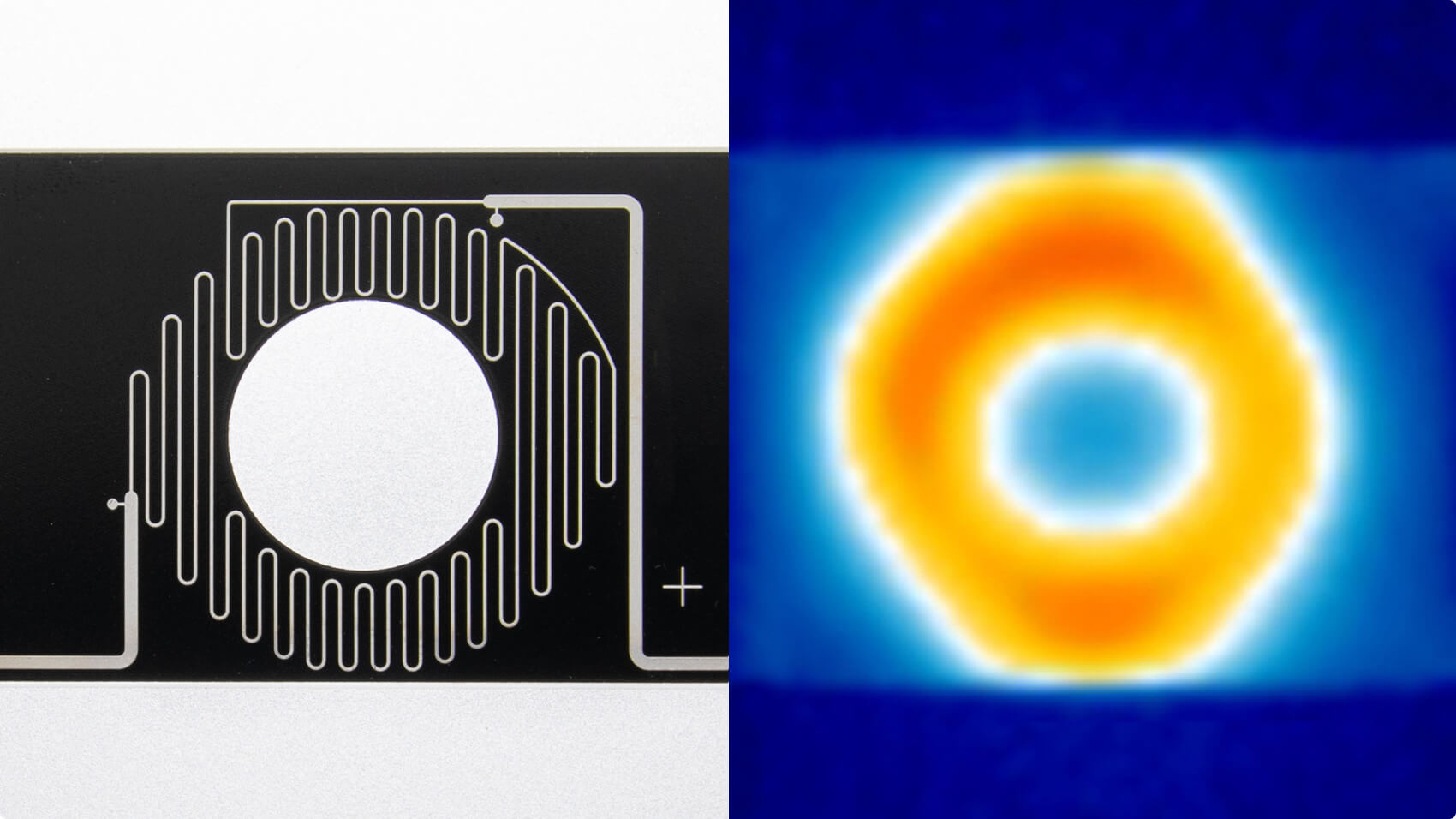
Clear view for cameras and sensors thanks to printed electronics
Irlbacher presents a newly developed generation of heatable glasses, which can be adapted to various applications in a wide range of areas. Filigree conductor tracks printed directly on glass serve as heating coils. These consist of ceramic paints and can be applied up to a width of less than 200 µm. When optical requirements are high, the conductor tracks can be arranged concentrically around the visual axis of the camera or sensor. As a second basic principle for heatable glass, we use the electrical conductivity of a transparent, metallic coating, which is structured using a laser.
In both processes, the warming layer is applied to the inside of the glass to protect it from environmental influences. Electric heating can be easily integrated into clever control strategies so that the windscreen, for example, only heats just above the dew point without increasing the temperature of cameras or sensors. In this way, current sustainability or energy efficiency requirements for mobile devices can be easily implemented and, for example, the protective glasses for outdoor cameras can be quickly and effectively defrosted or defrosted.
Both heating variants from Irlbacher are designed for an operating range of -40° C to +110° C, respond very quickly and can therefore be easily integrated into control concepts, for example to reliably prevent protective windows from fogging up when S-Bahn trains enter tunnels, so that train drivers or automated monitoring have a clear view of all entry areas or to monitor a barrier system reliably in all weather conditions.
Have we sparked your interest? Then it's best to contact our experts today at Anwendungstechnik@irlbacher.com

